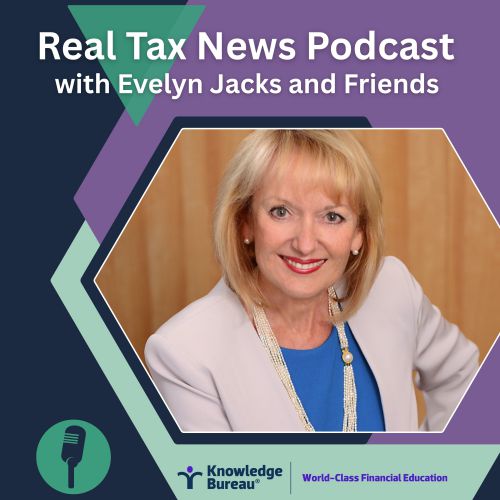
When CRA officially opened the electronic floodgates on tax filing season on February 23 this year, it was with a number of pieces of news. Did you know, for example, that the GST/HST Credit has now been officially renamed the Canada Groceries and Essentials Benefit (CGEB)? You get it by filing a tax return and interacting with CRA’s new digital services, which unfortunately still refer to the old name – the GST/HST Credit. It’s just one of those “game changers” that make Real Tax News with Evelyn Jacks and Friends, starting this week for its second season, so valuable to Canadians.
In Canada, as in many advanced economies, the age group that grew the fastest in recent years was those aged 65 and over. That’s not pandemic-related, it’s simply the aging of the baby boomers. Those over 65 tend to have the lowest labour force participation rate, and that has been pulling down the growth of Canada’s labour force in recent years, according to recent remarks by Tiff Macklem, Governor of the Bank of Canada. In addition, many small businesses in Canada are owned by Baby Boomers. There’s a potential problem if Baby Boomers own a business and plan to use the money they’ve invested to pay for their retirement years.
Nothing like a positive headline to grab your attention. The Financial Post article goes on to say: It’s been a miserable year for the global economy. And things could get worse with a mild recession potentially on the horizon. In an extreme downside scenario, this could wipe out US$5 trillion in global output, according to Bloomberg Economics. So, what to do?
There is no doubt your clients are interested in knowing how to inflation proof and recession-proof their wealth and navigate successfully through emerging risks from the CRA.
To accomplish the former, advisors must have broader knowledge on upcoming tax changes and how astute investment planning in a very new economic environment can help clients maximize after-tax income and reduce capital erosion.
Investing time and money into new Specialized Credentials or continuing professional develop is an important undertaking and you want to make the most of both. That’s why you’ll want to learn more about the tuition fee amount and the Canada Training Credit (CTC) as potential tax assistance when you take a Knowledge Bureau course.
Are you looking to increase your multi-generation client base? Here’s an obvious need and a huge void: 70% of private company owners in Canada plan to either transfer or sell their businesses when they retire—but many don’t have a plan in place. In fact, almost half plan to pass ownership to the next generation, but of those, 47% of them don’t have a succession plan[i]. You can fill this big void by advising family business and we have a targeted CE course to help you do that.
The October Knowledge Bureau Report poll question asked: “Are your clients worried about a recession in 2023 and its effects on their financial status?” Overwhelmingly, the answer was yes, at 87.25%. This means there is a tremendous opportunity to connect with your clients for year-end tax planning and help them stay on plan, with tax efficiency. Advisors who participated from across Canada had these observations:
 In Canada, as in many advanced economies, the age group that grew the fastest in recent years was those aged 65 and over. That’s not pandemic-related, it’s simply the aging of the baby boomers. Those over 65 tend to have the lowest labour force participation rate, and that has been pulling down the growth of Canada’s labour force in recent years, according to recent remarks by Tiff Macklem, Governor of the Bank of Canada. In addition, many small businesses in Canada are owned by Baby Boomers. There’s a potential problem if Baby Boomers own a business and plan to use the money they’ve invested to pay for their retirement years.
 Nothing like a positive headline to grab your attention. The Financial Post article goes on to say: It’s been a miserable year for the global economy. And things could get worse with a mild recession potentially on the horizon. In an extreme downside scenario, this could wipe out US$5 trillion in global output, according to Bloomberg Economics. So, what to do?
 There is no doubt your clients are interested in knowing how to inflation proof and recession-proof their wealth and navigate successfully through emerging risks from the CRA.
To accomplish the former, advisors must have broader knowledge on upcoming tax changes and how astute investment planning in a very new economic environment can help clients maximize after-tax income and reduce capital erosion.
There is no doubt your clients are interested in knowing how to inflation proof and recession-proof their wealth and navigate successfully through emerging risks from the CRA.
To accomplish the former, advisors must have broader knowledge on upcoming tax changes and how astute investment planning in a very new economic environment can help clients maximize after-tax income and reduce capital erosion.
 Investing time and money into new Specialized Credentials or continuing professional develop is an important undertaking and you want to make the most of both. That’s why you’ll want to learn more about the tuition fee amount and the Canada Training Credit (CTC) as potential tax assistance when you take a Knowledge Bureau course.
 Are you looking to increase your multi-generation client base? Here’s an obvious need and a huge void: 70% of private company owners in Canada plan to either transfer or sell their businesses when they retire—but many don’t have a plan in place. In fact, almost half plan to pass ownership to the next generation, but of those, 47% of them don’t have a succession plan[i]. You can fill this big void by advising family business and we have a targeted CE course to help you do that.
 The October Knowledge Bureau Report poll question asked: “Are your clients worried about a recession in 2023 and its effects on their financial status?” Overwhelmingly, the answer was yes, at 87.25%. This means there is a tremendous opportunity to connect with your clients for year-end tax planning and help them stay on plan, with tax efficiency. Advisors who participated from across Canada had these observations: