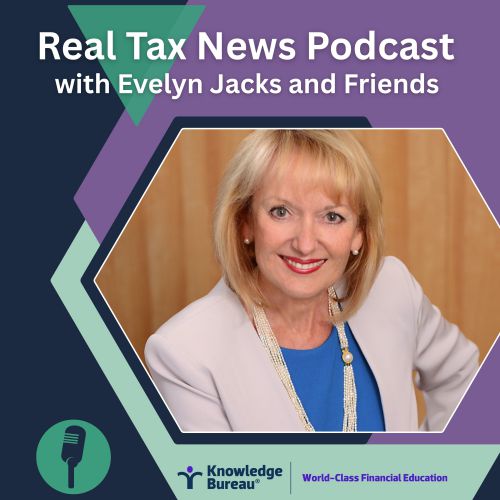
When CRA officially opened the electronic floodgates on tax filing season on February 23 this year, it was with a number of pieces of news. Did you know, for example, that the GST/HST Credit has now been officially renamed the Canada Groceries and Essentials Benefit (CGEB)? You get it by filing a tax return and interacting with CRA’s new digital services, which unfortunately still refer to the old name – the GST/HST Credit. It’s just one of those “game changers” that make Real Tax News with Evelyn Jacks and Friends, starting this week for its second season, so valuable to Canadians.
“The Future is No Clearer”. This according to the Bank of Canada Governor who announced on April 16 that he is holding interest rates at their current level. Nonetheless, Knowledge Bureau will tackle the subject with authority and practicality at the May 21 CE Summit. The subjects: Tax Year 2025 - New Taxes or New Benefits across the Provinces and with a new federal government. Also, Planning with Trusts – Bare Trust, Special Trusts, Post-Mortem, Retirement Income Planning across four client profiles and embracing wealth planning opportunities with tax efficiency. Get the whole story, interpret it and share your knowledge during our live virtual CE Savvy Summit on May 21. Save Money, Register by May 15. Here’s more:
Knowledge Bureau is honored and proud to introduce the distinguished partners at the Acuity Conference for Distinguished Advisors, November 23-26 in Puerto Vallarta Mexico. Please check out their unique value propositions in the financial services industries they serve and click on their logos on the official conference page for more information. Then check out the amazing agenda - so far – for this thought leadership event. A great way to earn CE/CPD credits and network with an outstanding audience of leaders from coast-to-coast:
What’s keeping your clients up at night? How do we help clients accumulate, grow, preserve and transition wealth with the continued volume of change coming from new governments in Ottawa and Washington? How do we temper harm from difficult relationships people have with money? Share your thoughts on proactively managing client concerns with strategy, process, and answers to these three critical questions, as we hear case study approaches from our panelists at the April 23 Introduction to Real Wealth Management™ Orientation. Learn more and then join these professionals who are the change-makers of the financial services by earning your own specialized credentials as an RWM™.
We might be distracted by the political, tax and economic shocks dominating the daily news. But from an investment point of view, advisors may be missing something important. The very definition of “wealth maximization” as we have commonly known it, is not resonating there is a reason why: “business as usual” has eroded value and requires a shake up to build the economy we need in the future. The answer, for some, is “impact investing”, and there has never been a better time to consider this.
Where are the Happy Landings in this new Era of Risk and Reward? That will be the focus of the 2025 Acuity Conference for Distinguished Advisors November 23-26 in Puerto Vallarta, Mexico. It may in fact, be the most important conference you attend this year. Canada’s only multi-disciplinary gathering, appropriately in Mexico, will bring thought leaders together to ponder our New Era of Risk and Reward.
The news can be jarring for your clients. In these volatile times, tax accounting and financial advisors do important work, together. A special shout-out goes out today to our highly educated, skilled and experienced certificate and designation holders working hard to help their clients make sense of events that trigger financial decision-making, especially to the RWMs™. Here’s why.
 “The Future is No Clearer”. This according to the Bank of Canada Governor who announced on April 16 that he is holding interest rates at their current level. Nonetheless, Knowledge Bureau will tackle the subject with authority and practicality at the May 21 CE Summit. The subjects: Tax Year 2025 - New Taxes or New Benefits across the Provinces and with a new federal government. Also, Planning with Trusts – Bare Trust, Special Trusts, Post-Mortem, Retirement Income Planning across four client profiles and embracing wealth planning opportunities with tax efficiency. Get the whole story, interpret it and share your knowledge during our live virtual CE Savvy Summit on May 21. Save Money, Register by May 15. Here’s more:
 Knowledge Bureau is honored and proud to introduce the distinguished partners at the Acuity Conference for Distinguished Advisors, November 23-26 in Puerto Vallarta Mexico. Please check out their unique value propositions in the financial services industries they serve and click on their logos on the official conference page for more information. Then check out the amazing agenda - so far – for this thought leadership event. A great way to earn CE/CPD credits and network with an outstanding audience of leaders from coast-to-coast:
 What’s keeping your clients up at night? How do we help clients accumulate, grow, preserve and transition wealth with the continued volume of change coming from new governments in Ottawa and Washington? How do we temper harm from difficult relationships people have with money? Share your thoughts on proactively managing client concerns with strategy, process, and answers to these three critical questions, as we hear case study approaches from our panelists at the April 23 Introduction to Real Wealth Management™ Orientation. Learn more and then join these professionals who are the change-makers of the financial services by earning your own specialized credentials as an RWM™.
 We might be distracted by the political, tax and economic shocks dominating the daily news. But from an investment point of view, advisors may be missing something important. The very definition of “wealth maximization” as we have commonly known it, is not resonating there is a reason why: “business as usual” has eroded value and requires a shake up to build the economy we need in the future. The answer, for some, is “impact investing”, and there has never been a better time to consider this.