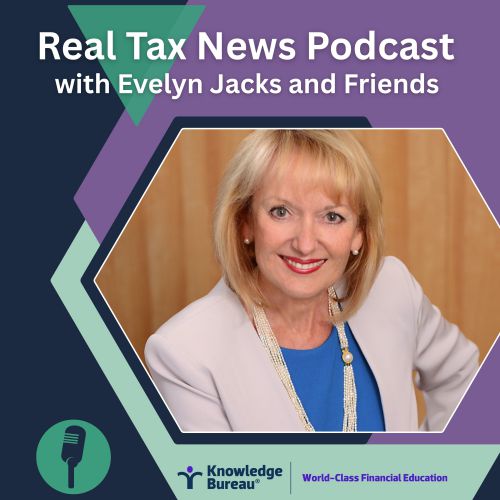
When CRA officially opened the electronic floodgates on tax filing season on February 23 this year, it was with a number of pieces of news. Did you know, for example, that the GST/HST Credit has now been officially renamed the Canada Groceries and Essentials Benefit (CGEB)? You get it by filing a tax return and interacting with CRA’s new digital services, which unfortunately still refer to the old name – the GST/HST Credit. It’s just one of those “game changers” that make Real Tax News with Evelyn Jacks and Friends, starting this week for its second season, so valuable to Canadians.
Tax season is now in full swing, according to the most recent 2022 season filing statistics from the CRA. As of March 7 almost 2.5 million returns had been filed, with over 95% through electronic filing methods E=File and Netfile. As we approach the height of the season, does you team have the necessary resources to deal with the demands?
Did you know the federal government intends to double the Home Accessibility Tax Credit for tax year 2022? This week’s tax tip is relevant to caregivers and those age 65 or older. You may even be eligible to make a claim this year. Here’s what you need to know:
If you need answers to complex questions your high net worth families are asking about their income and capital after personal, corporate, trust and cross-border taxation, or when new triggers are driving financial decisions your clients want to make, working with a Real Wealth Manager (RWM™) can help you answer and execute on them. This is particularly so in today’s complex world when financial peace of mind – and answers to tough questions – both are more difficult to come by.
Do you have complex tax questions difficult to find on the CRA website? Are you too busy for long wait times on the phone with the CRA? At Knowledge Bureau we have a great solution to help you save time and money and answer more tax questions from your clients with confidence. It’s called Evergreen Explanatory Notes, your fast guide to issues, answers, explanations, client interview guides case studies, tax court cases, plus a fast way to link directly to all pertinent CRA forms, guides, folios, the Income Tax Act and much more!
For Canadian tax purposes there are basically two kinds of trusts: testamentary and inter vivos. A testamentary trust is one that arises on and in consequence of an individual’s death. An inter vivos trust is any trust other than a testamentary trust. Trusts have been thrust into the spotlight recently with new tax filing requirements. Knowledge Bureau has launched a new course to help advisors educate their clients. Here is a primer of what you will learn:
Are you interested in enhancing your value proposition and broadening your client service offering? Amplifying your referrals? Becoming a holistic wealth advisor? Then you may be interested in learning more about the Real Wealth Managers RWM™ Designation – a new designation that differentiates collaborative financial leaders in the marketplace. You’re invited to join us for a complementary virtual Lunch & Learn on March 2 at 12 PM CST to learn more!
 Tax season is now in full swing, according to the most recent 2022 season filing statistics from the CRA. As of March 7 almost 2.5 million returns had been filed, with over 95% through electronic filing methods E=File and Netfile. As we approach the height of the season, does you team have the necessary resources to deal with the demands?
 Did you know the federal government intends to double the Home Accessibility Tax Credit for tax year 2022? This week’s tax tip is relevant to caregivers and those age 65 or older. You may even be eligible to make a claim this year. Here’s what you need to know:
 If you need answers to complex questions your high net worth families are asking about their income and capital after personal, corporate, trust and cross-border taxation, or when new triggers are driving financial decisions your clients want to make, working with a Real Wealth Manager (RWM™) can help you answer and execute on them. This is particularly so in today’s complex world when financial peace of mind – and answers to tough questions – both are more difficult to come by.
 Do you have complex tax questions difficult to find on the CRA website? Are you too busy for long wait times on the phone with the CRA? At Knowledge Bureau we have a great solution to help you save time and money and answer more tax questions from your clients with confidence. It’s called Evergreen Explanatory Notes, your fast guide to issues, answers, explanations, client interview guides case studies, tax court cases, plus a fast way to link directly to all pertinent CRA forms, guides, folios, the Income Tax Act and much more!
 For Canadian tax purposes there are basically two kinds of trusts: testamentary and inter vivos. A testamentary trust is one that arises on and in consequence of an individual’s death. An inter vivos trust is any trust other than a testamentary trust. Trusts have been thrust into the spotlight recently with new tax filing requirements. Knowledge Bureau has launched a new course to help advisors educate their clients. Here is a primer of what you will learn:
 Are you interested in enhancing your value proposition and broadening your client service offering? Amplifying your referrals? Becoming a holistic wealth advisor? Then you may be interested in learning more about the Real Wealth Managers RWM™ Designation – a new designation that differentiates collaborative financial leaders in the marketplace. You’re invited to join us for a complementary virtual Lunch & Learn on March 2 at 12 PM CST to learn more!