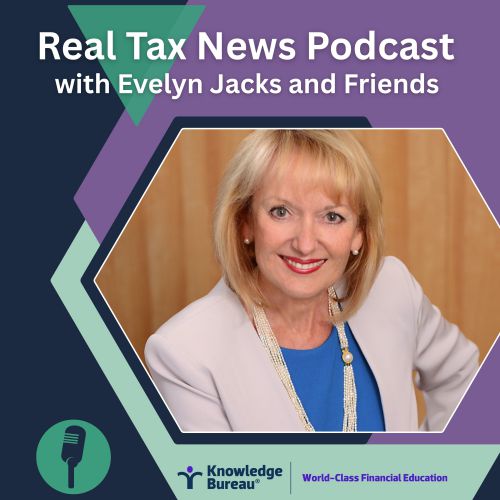
When CRA officially opened the electronic floodgates on tax filing season on February 23 this year, it was with a number of pieces of news. Did you know, for example, that the GST/HST Credit has now been officially renamed the Canada Groceries and Essentials Benefit (CGEB)? You get it by filing a tax return and interacting with CRA’s new digital services, which unfortunately still refer to the old name – the GST/HST Credit. It’s just one of those “game changers” that make Real Tax News with Evelyn Jacks and Friends, starting this week for its second season, so valuable to Canadians.
Shake out the cobwebs and sharpen your tax knowledge with Canada’s most popular advanced tax update featuring a detailed line-by-line approach to the new 2018 forms and schedules from the CRA. The national tour featuring keynote speaker Evelyn Jacks and an outstanding faculty of experienced instructors starts Thursday January 17 in Winnipeg; then arrives Monday the 21 in Toronto ; Ottawa on the 22, Calgary on the 23, Edmonton on the 24 and Vancouver on the 25th. Don’t miss out - there are only a few spots left so call or enroll online today.
A newly updated certificate tax course focused on the dramatic changes to tax planning for corporate owner-managers is launching today. It’s so important that its updater, Dr. Dean Smith of Cadesky Tax says that advisors who do not understand these rules may very well cause harm to their clients. Here’s why:
As a newcomer to Canada, Iqbal Sidhu shares how his Knowledge Bureau education helped him transition into a new career path in professional tax filing as a result of his successful pursuit of the DFA – Tax Services Specialist designation:
The most awaited tax change for the broadest base of taxpayers is the legislation allowing the government to automatically compute the Canada Workers Benefit (CWB) for tax year 2019. This benefit will replace the current Working Income Tax Benefit. But, it requires designated educational institutions to report for each student whether they are studying on a full- or part-time basis so that their eligibility for the CWB can be determined.
Ruth Horst from Hamilton, Ontario specializes in personal income tax filing and, as the early-bird registration deadline for this year’s CE Summit personal income tax update draws near, she shares how these workshops have provided important benefits to her role.
A new book by Jenifer Bartman and Evelyn Jacks will be released next week by Knowledge Bureau. It addresses a common family secret that plagues millions of Canadians from coast to coast: what to do with the family business time bomb at a time when boomers are contemplating retirement.
 Shake out the cobwebs and sharpen your tax knowledge with Canada’s most popular advanced tax update featuring a detailed line-by-line approach to the new 2018 forms and schedules from the CRA. The national tour featuring keynote speaker Evelyn Jacks and an outstanding faculty of experienced instructors starts Thursday January 17 in Winnipeg; then arrives Monday the 21 in Toronto ; Ottawa on the 22, Calgary on the 23, Edmonton on the 24 and Vancouver on the 25th. Don’t miss out - there are only a few spots left so call or enroll online today.
 A newly updated certificate tax course focused on the dramatic changes to tax planning for corporate owner-managers is launching today. It’s so important that its updater, Dr. Dean Smith of Cadesky Tax says that advisors who do not understand these rules may very well cause harm to their clients. Here’s why:
 As a newcomer to Canada, Iqbal Sidhu shares how his Knowledge Bureau education helped him transition into a new career path in professional tax filing as a result of his successful pursuit of the DFA – Tax Services Specialist designation:
 The most awaited tax change for the broadest base of taxpayers is the legislation allowing the government to automatically compute the Canada Workers Benefit (CWB) for tax year 2019. This benefit will replace the current Working Income Tax Benefit. But, it requires designated educational institutions to report for each student whether they are studying on a full- or part-time basis so that their eligibility for the CWB can be determined.
 A new book by Jenifer Bartman and Evelyn Jacks will be released next week by Knowledge Bureau. It addresses a common family secret that plagues millions of Canadians from coast to coast: what to do with the family business time bomb at a time when boomers are contemplating retirement.