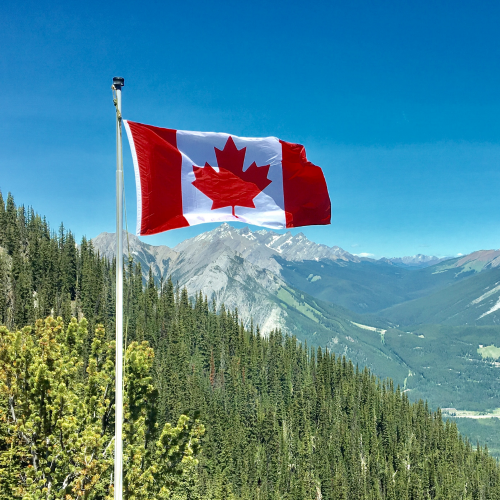
Spring Economic Statement: April 28, 2026
April 15, 2026: Ottawa, Ontario - Yesterday, the Honourable François-Philippe Champagne, Minister of Finance and National Revenue, announced that he will table the Spring Economic Update 2026 on Tuesday, April 28, 2026. In the Spring Economic Update 2026, the government will provide an update on its plan to build the strongest economy in the G7, and outline additional actions taken to drive prosperity, play to Canada’s strengths, and support Canadians where and when they need it most.Top Business Building Ideas From DAC 2010
 The Distinguished Advisor Conference 2010 concluded in Orlando this week, to rave reviews and hundreds of business building ideas for the over 130 advisors in attendance. Amongst the top strategic business building thoughts:
A greater focus on family planning is important. Professionals need to be more disciplined with clients and their children by transitioning from individual to family planning.
Advisors play a key role in financial literacy education. Educate your team and implement a "knowledge campaign.î Use plain language and be sure to communicate carefully with clients to ensure they really understand your message. Focus on family education: by helping parents, you are actually helping their children.
Understand financial behavior. Start with your personal relationship with money. It will affect how you speak to your clients about theirs.
Be conservative with your clientsí moneyóhelp them to manage debt and risk while building wealth. Teach your clients the difference between good and bad debt. These are difficult times.
No individual is an island. Our children and grandchildren are the future. Lead by example: ask and learn more about the family. No matter what clients are going through, professionals need to let them know there is a light.
Strategic financial planning includes electronic communications with the whole family. If you want to connect with younger generations, you must have electronic messaging strategies and use internet-based communications tools to grow your business.
The economy is driven by confidenceóadvisors need to help instill confidence in clients in working with their money through intergenerational planning. . .seven generation thinking! Reassure them that with proper strategic planning and your counsel they will be okay.
Encourage clients to take advantage of all tax credits related especially to pre-retirement planning, retirement planning, medical expenses and disability-related tax preferences. This is a topic often neglected by financial advisors. Remember that 20% of lifetime health care costs occur in the last year of lifeóare you ready to be in the business of "ego, dignity and respect?î
Statistically, 8 out of 10 clients are looking for new advisorsónow is a good time to ask for referral business.
You do important work.
ADDITIONAL EDUCATIONAL RESOURCE: For more information on next yearís DAC in Palm Springs, CA, November 13 to 16: see www.knowledgebureau.com/dac
The Distinguished Advisor Conference 2010 concluded in Orlando this week, to rave reviews and hundreds of business building ideas for the over 130 advisors in attendance. Amongst the top strategic business building thoughts:
A greater focus on family planning is important. Professionals need to be more disciplined with clients and their children by transitioning from individual to family planning.
Advisors play a key role in financial literacy education. Educate your team and implement a "knowledge campaign.î Use plain language and be sure to communicate carefully with clients to ensure they really understand your message. Focus on family education: by helping parents, you are actually helping their children.
Understand financial behavior. Start with your personal relationship with money. It will affect how you speak to your clients about theirs.
Be conservative with your clientsí moneyóhelp them to manage debt and risk while building wealth. Teach your clients the difference between good and bad debt. These are difficult times.
No individual is an island. Our children and grandchildren are the future. Lead by example: ask and learn more about the family. No matter what clients are going through, professionals need to let them know there is a light.
Strategic financial planning includes electronic communications with the whole family. If you want to connect with younger generations, you must have electronic messaging strategies and use internet-based communications tools to grow your business.
The economy is driven by confidenceóadvisors need to help instill confidence in clients in working with their money through intergenerational planning. . .seven generation thinking! Reassure them that with proper strategic planning and your counsel they will be okay.
Encourage clients to take advantage of all tax credits related especially to pre-retirement planning, retirement planning, medical expenses and disability-related tax preferences. This is a topic often neglected by financial advisors. Remember that 20% of lifetime health care costs occur in the last year of lifeóare you ready to be in the business of "ego, dignity and respect?î
Statistically, 8 out of 10 clients are looking for new advisorsónow is a good time to ask for referral business.
You do important work.
ADDITIONAL EDUCATIONAL RESOURCE: For more information on next yearís DAC in Palm Springs, CA, November 13 to 16: see www.knowledgebureau.com/dac
New Publication: Death of a RRIF Annuitant
CRA released an updated Publication RC4178 Death of a RRIF Annuitant on October 27. It has been modified to allow the rollover of RRIF proceeds to the RDSP of the financially dependant child or grandchild of the deceased, a change stemming from the March 4, 2010 budget .
These changes will be in effect on July 1, 2011 for deaths occurring after March 3, 2010. Eligible transfers must take place after June 30, 2011. Transitional rules apply for the death of the RRIF annuitant after 2007 and before 2011 that allow similar treatment of the RRIF proceeds. Under these rules the contribution must be made between July 1st and December 31st 2011.
These changes also apply to the proceeds of RRSPs and certain lump-sum amounts from Registered Pension Plans. For more information see:
http://www.cra-arc.gc.ca/E/pub/tg/rc4460/README.html
Canada has Lowest Proportion of Seniors In OECD
Although our population is aging we have one of the lowest proportions of seniors in OECD (Organization for Economic Development and Co-operation) countries. In 2005 seniors comprised 13.5% of our population compared to 16% in the United Kingdom, 16.6% in France and 20.2% in Germany. Interestingly, the U.S. had only 12.8% of its population represented by seniors. The baby boom will increase these percentages in the years to come and life expectancy will continue to increase.
Preparation for this senior population explosion is important, particularly because the value of pension savings declined during the financial crisis in 2008 ñ no surprise there. Employer-sponsored pension plans have the lion's share of these assets.
This is particularly true for advisors and their senior clients in the Maritimes, which has the largest proportion of seniors, while Alberta has the smallest, due in no small part to the out-migration of young workers.
More seniors are working beyond the traditional age of retirement and median after-tax incomes have increased significantly since 1982.
In the general population, educated Canadians tend to have higher incomes. This is also true among seniors but not to the same degree because our income security programs (Old Age Security and Guaranteed Income Supplement) tend to level the playing field.
Source: Statistics Canada, Canada Yearbook 2010.
ADDITIONAL EDUCATIONAL RESOURCES: Tax Efficient Retirement Income Planning Course
Lest We Forget…..Poppies Are GST-Free
In an honorable gesture, a measure announced on October 28, 2010, retroactive to January, 2010, provides for a rebate on all GST paid to suppliers for wreaths and poppies acquired by the Royal Canadian Legion for Remembrance Day. The Legion, in addition, cannot charge GST when selling these items.
CPP Maximum Premiums Raised to $185 a month
Canadians will again pay more to fund the Canada Pension Plan this year, as maximum pensionable earnings will be increased to $48,300, in line with increases in average weekly salaries. A $3500 basic exemption, unchanged from prior years, ensures that no premiums are payable if income is less than this amount. As the premium rate applied remains unchanged at 9.9% for the combined employer/ employee remittance requirements, the maximum premium will be $2217.60 ($184.80 per month) for employees and $4435.20 ($369.60 per month) for the self employed.
It's important to maximize benefits from the CPP by planning to assign them equally between spouses and planning early on whether or not one should wait to age 65 to begin receiving benefits, or tap into them as early as age 60. Advisors and their clients will want to have this discussion several months in advance of receipt of benefits to allow for the application process, but also to perhaps defer income into the right time of the year in 2011.
Additional Educational Resources: Tax Efficient Retirement Income Planning Course featuring The Knowledge Bureau's Retirement Income Projector. Also available in EverGreen Explanatory Notes.
Canada Yearbook 2010 Released By Statistics Canada
The Canada Year Book (CYB), which was first published in 1867 ñ a significant year in Canadian historyóhas just been released for purchase and download. Its data is based on the 2009 year. This year's version is now available for purchase and has just been released for download: http://www.statcan.gc.ca/pub/11-402-x/index-eng.htm. Data from 2009 is most recently analyzed, and the findings are interesting. . . .
Investors Returned. Both foreigners and Canadians invested in Canadian assets as the TSX Composite Index rebounded in 2009.
Spending Increased; So Did Net Worth. The effects of the 2008-2009 global recession were milder and shorter in Canada than in other G7 countries. In 2009 consumer spending increased slightly and government spending rose considerably due in great part to economic stimulus. Personal income and national net worth increased slightly, while net foreign debt increased due to our strong dollar and the deficit.
Purchasing Power. The purchasing power of Canadians and household spending increased in 2008. An increase in export prices due to a strong demand for resources made the cost of imported goods more affordable.
Non-Discretionary Spending. Low income households spent 52% of their budgets on food, shelter and clothing while wealthy households directed only 28% of their budgets to basics.
Women and Work. In 7 out of 10 families both spouses were working in 2008, compared to 4 out of 10 in the mid-1970s. Women are working longer and earning more and the percentage of women who are equal or primary breadwinners has risen.
Working Moms In 40's Doubles. More women are delaying childbirth in order to complete their education and launch careers. Over the last 20 years the number of mothers in their 40s with preschool age children has doubled! The number of working mothers with young children also doubled to 74% from 1976 to 2008.
Next time: CANADA HAS LOWEST PROPORTION OF SENIORS IN OECD
ADDITIONAL EDUCATIONAL RESOURCES: INTRO to personal tax