U.S. Cross-Border Tax Planning: What Should Canadians Be Watching?
As Canadians continue to travel, work, invest and own property across the Canada–U.S. border, understanding the tax consequences remains an important part of year-end planning. From residency and foreign asset reporting to U.S. real estate and retirement income, what should tax and financial advisors be reviewing with their clients before December 31? Enrol by October 30 to learn more at the November 5 CE Savvy Summit.
At the November 5 CE Savvy Summit: Year-End Tax Planning for Investors and Business Owners, Dr. Dean Smith, PhD, CFP, TEP, CPA, CA, RWM™, FDFS™, will address these issues in “U.S. Cross Border Planning in Volatile Times.”
His session will provide an update on U.S.–Canada tax consequences and the filing requirements affecting Canadians with cross-border financial interests.
Residency, Employment and Snowbirds: What Has Changed?
One of the central issues in cross-border taxation is residency and its impact on tax obligations.
Dean will examine the tax consequences of residency, including considerations for Canadians travelling to the United States for employment, business or extended personal stays.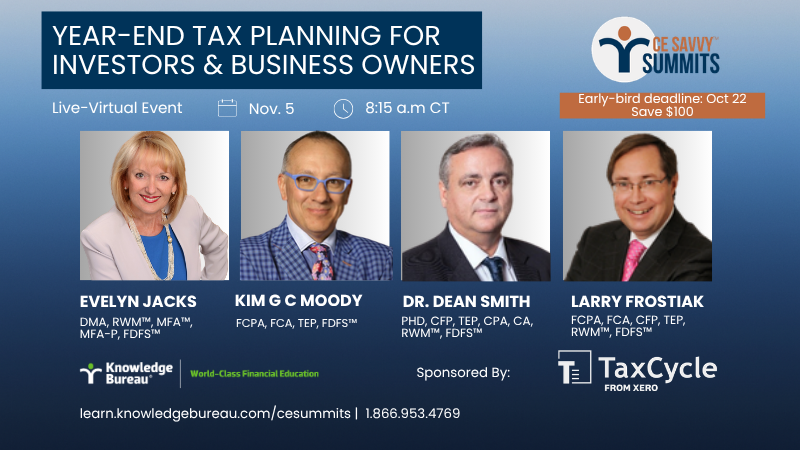
The session will address:
- Residency and its impact on taxation
- Cross-border employment, investments and pension plans
- What's new for Canadian snowbirds
- Updated filing requirements affecting snowbirds
These topics are particularly relevant for advisors working with clients whose personal and financial activities extend into both countries.
Foreign Assets, Rental Income and U.S. Investments
Cross-border financial arrangements can also involve additional reporting obligations.
Dean will review filing requirements for Canadians with offshore assets, along with the obligations of non-resident Canadians earning rental income from Canadian property.
The discussion will include Section 216 filings and NRV numbers, as identified in the Summit agenda.
Additional considerations include:
- Selling U.S. real estate
- Withdrawing U.S. investments and accessing U.S. pension income
- Opening and closing U.S. investment accounts
- Tax considerations when a Canadian dies owning U.S. property
Understanding these requirements is an important part of identifying the reporting and tax issues that may arise from cross-border ownership and investment activities.
Year-End Planning for Canadian Business Owners with U.S. Interests
Canadian business owners with financial or commercial interests in the United States face additional year-end considerations.
Dean's session will also address planning issues affecting Canadian business owners with U.S. interests, alongside the broader implications of cross-border residency, employment and investments.
This portion of the discussion will be particularly relevant for advisors serving entrepreneurs and owner-managers whose business activities extend beyond Canada.
The Bottom Line
Cross-border tax planning involves more than determining where income is earned. Residency, reporting obligations, foreign investments, real estate ownership and retirement income can all affect the tax requirements of Canadians with U.S. connections.
Dr. Dean Smith's November 5 session will provide a timely review of these issues, including updated filing requirements and year-end planning considerations for individuals, investors and business owners.
Join Dean Smith at Knowledge Bureau's CE Savvy Summit: Year-End Tax Planning for Investors and Business Owners, alongside Evelyn Jacks, Larry Frostiak and Kim G C Moody, for a full day of advanced technical tax education.
The live virtual Summit begins at 8:15 a.m. Central Time and includes recordings, a five-chapter online course, EverGreen Explanatory Notes and 20 CE/CPD credits.
Explore the November 5 CE Savvy Summit and Register
 Help & Contact: 1 866 953 4769