Registered Charities Consultations: Have Your Say and Sharpen Your Tax Knowledge

Advanced donation strategies for professionals will be covered next week at the November 5 CE Savvy Summit and it’s not too late to register to attend. Later that evening we’ll also provide in depth coverage of the November 5 federal budget. However, don’t forget about another important consultation date for you to participate in, especially if you hold the DMA-Specialist™, RWM™ or MFA-P™ Designation. That’s December 3; make your voices heard on the modernization of the charitable donation sector and its tax administration. Here’s what to know:
The Backdrop. The Department of Finance and the Canada Revenue Agency have begun consultations on ways to modernize the governance of the more than 86,000 registered charities in Canada. Specifically, they're looking for input on the registration process, digital service delivery, audit and compliance regulations, and the revocation and objections processes for charities. It’s an appropriate topic as professionals approach year end tax planning strategies.
The consultation period offers an opportunity for both you and your donor and charity clients to offer suggestions regarding tax filing procedures and any obstacles you face in filing on behalf of a charity.
Comments and feedback on the government's consultations can be sent by email to charity-bienfaisance@fin.gc.ca, with “Modernizing the Framework for the Charitable Sector” as the subject line. Remember, the deadline is December 3, 2026.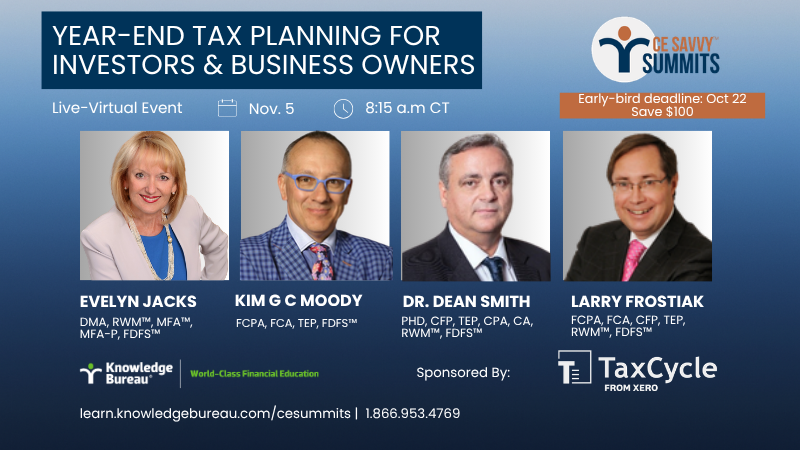
The Issues: Registration and Digital Services
CRA is looking to find out if the system is user-friendly or, if your clients are not using the digital option, why not?
Only about 1% of all applications for charitable status are rejected. So it appears tax professionals and their clients are doing a very good job of providing information to the CRA. However, CRA’s response times are an issue. The target for a ruling on an application is nine months, and CRA only meets that target about 80% of the time. Potential new charities could be left in limbo for an unreasonable length of time awaiting approval from CRA.
Audits and Revocations
The entire audit and revocation process is on the table in these consultations as well. Avoiding a CRA audit is always the goal. While it's rare for a charity to have its status revoked, it does happen. In 2025–26, 52 charities had their status revoked by CRA.
One question being asked in the consultation is if CRA should more widely publicize when an audit is taking place, and especially if that audit results in revocation. Potential donors to these organizations may not be aware that their charity of choice is no longer registered.
Sharpen Your Saw: Year-End Focus on Donations
Beyond the consultation process, the tax math needs to be right for charities and in particular for those who are planning with clients giving to them. These include fairly complex concepts, and for these reasons, the key issues and basic skills needed to identify planning opportunities and tax-related consequences will be front and centre in Larry Frostiak's session at the November 5 CE Savvy Summit. The session will also include planning ideas for shareholders of privately held corporations and how to create a charitable giving plan to optimize cash flows and minimize taxes on death.
The tax rules relating to donations and estates were introduced about a decade ago but are not always fully understood by tax preparers and advisors. The rules relating to gifts made by a Graduated Rate Estate (GRE) will be discussed in detail, with examples to illustrate the concepts. The session also provides proactive planning ideas to “meld” charitable giving with tax optimization.
The Top Three: What Should Advisors Know?
Larry's session will focus on three important matters:
- What is a qualified gift, what is not, and what may not necessarily be a qualified gift in an estate situation.
- How the Alternative Minimum Tax (AMT) may affect charitable giving during one's lifetime.
- Why proactive planning and discussions with clients today are a key priority in providing a foundation for estate planning and wealth transition.
Test Your Knowledge: Are You Ready for Year-End?
There are several technical issues advisors should understand when it comes to strategic philanthropy:
- Whether one or both spouses can claim the donation tax credit for a charitable donation to a qualified donee.
- The ability to optimize taxes on gifts of publicly traded securities, including potential AMT implications.
- How the Graduated Rate Estate concept applies to donations made through a will.
- The differences between personal and corporate gifts.
- The treatment of gifts of capital property and appreciated publicly traded securities.
- How donation tax credits can be applied following the death of a taxpayer.
Registrations for the November 5 CE Savvy Summit will be accepted until November 4.
Explore the November 5 CE Savvy Summit and Register
The Bottom Line. The federal government consultations are an opportunity for tax professionals to offer input on how the charitable sector's regulatory system can be improved. Donors, charities and tax professionals all have a stake in this process. At the same time, understanding the tax rules surrounding charitable giving is an important part of year-end planning, particularly when donations involve spouses, corporations, estates and trusts.
Additional Educational Resources. For further professional development, join tax experts Evelyn Jacks, Dr. Dean Smith, Kim Moody and Larry Frostiak at the November 5 CE Savvy Summit. Contact Knowledge Bureau for personal assistance and group rates at 1.866.953.4769.
Finally, invite your clients to listen to Real Tax News with Evelyn Jacks and Friends to understand their tax system better, anywhere you listen to your favorite podcasts or here: Listen to Real Tax News
 Help & Contact: 1 866 953 4769