Enough Relief? Fuel Tax Holiday Extended

Evelyn Jacks
In response to the high costs of fuel, the Finance department has introduced by Bill C-38 which will extend the temporary suspension of the federal fuel excise tax until January 31, 2027. Unfortunately, the relief will then phase out, just as inflationary pressures mount with rising gasoline prices. Here’s what you need to know:
Regular fuel rates will be reduced by 50% until March 31, 2027, after which the fuel tax holiday will end. This would be a good time for the government to do something more in their upcoming fall federal budget; for example, to permanently increase the basic personal amount to reflect the cost of living for average families.
The Backdrop. The fuel tax holiday was introduced in the spring of 2026 to provide some relief at the pump. It applies to gasoline, aviation gasoline (leaded and unleaded), diesel fuel, and aviation fuel. The original measure saved 10 cents per litre on gasoline and unleaded aviation gasoline, 11 cents per litre on leaded aviation gasoline, and 4 cents per litre on diesel fuel and aviation fuel.
According the government’s news release of September 22, 2026, this new measure will keep the federal excise tax rates suspended up to and including January 31, 2027 (so make a note to fill the tank before the end of January).
From February 1, 2027 until and including March 31, 2027, federal fuel excise tax rates would be 5 cents per litre for gasoline and unleaded aviation gasoline, 5.5 cents per litre for leaded aviation gasoline, and 2 cents per litre for diesel fuel and aviation fuel.
Future Relief. As gas prices continue to rise, with no immediate end in sight, The Groceries and Essentials Benefit is noted by the government as one of the ways for families to take advantage of additional relief, but unfortunately access to the benefit is dependent upon the filing of a tax return, which millions of people miss every year, and it is income tested at the front end and the back end.
For the 2026-2027 benefit year, the full entitlement to this benefit doesn’t begin until adjusted net income for the 2025 tax year exceeded $11,564 for a single person. The phase out threshold, or the clawback zone, begins at a family net income level of $46,432. It amounts to about 5 cents for every dollar earned above this. Families with incomes above $65,000 may reach the phase out depending on the number of children they have.
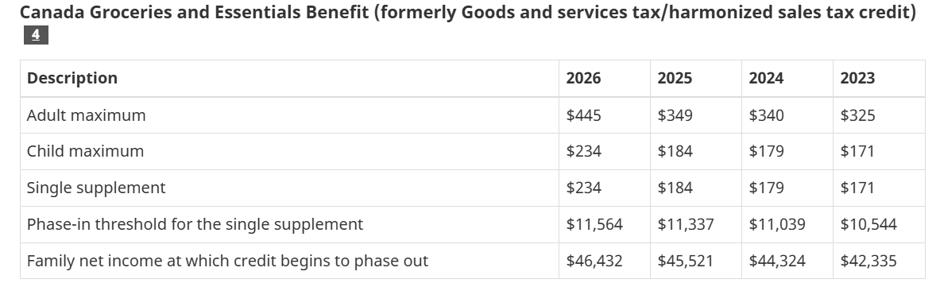
Note that the government did increase the Canada Groceries and Essentials Benefit (formerly the Goods and services tax/harmonized sales tax credit) by 25% for five years starting in July 2026 to the amounts listed in the chart above. Indexation will resume in 2027.
But has government relief been enough? Statistics Canada notes gasoline inflation (year over year) to be the following:
- April 2026: Gasoline prices rose 28.6% over the year before
- May 2026: Gasoline prices surged 33.2%.
- June 2026: Gasoline inflation eased to 20.5%.
- July 2026: Gasoline prices climbed back to 25.7%.
- August 2026: Gasoline prices again eased back to 22.8%
The ongoing Middle East conflicts now has pushed crude and gasoline prices past $100–$108 a barrel in September. Inflationary pressures certainly will continue at this rate.
Bottom Line: More tax relief is needed to help Canadian families deal with economic volatility and in particular fuel prices as we head into fall. Let’s see what the fall Federal budget brings as relief given these new and painful realities.
Be sure to sign up for the CE Summit Year End Tax Planning Update on November 5 for all the news as you plan with your clients to pay the least amount of taxes possible for 2026 in defence of the prices at the pump and in the grocery store.

 Help & Contact: 1 866 953 4769